Homotopy
for percussion, sensors
and real-time electronics
2017
First version: Shizuoka (Japan), 2016
Final version: Venice Biennale, September 2017
Performed by Thierry Miroglio
The first version was premiered in Shizuoka, Japan, in 2016 by Thierry Miroglio. The final version was premiered at the Venice Biennale in September 2017. The piece was developed in close collaboration with percussionist Thierry Miroglio.
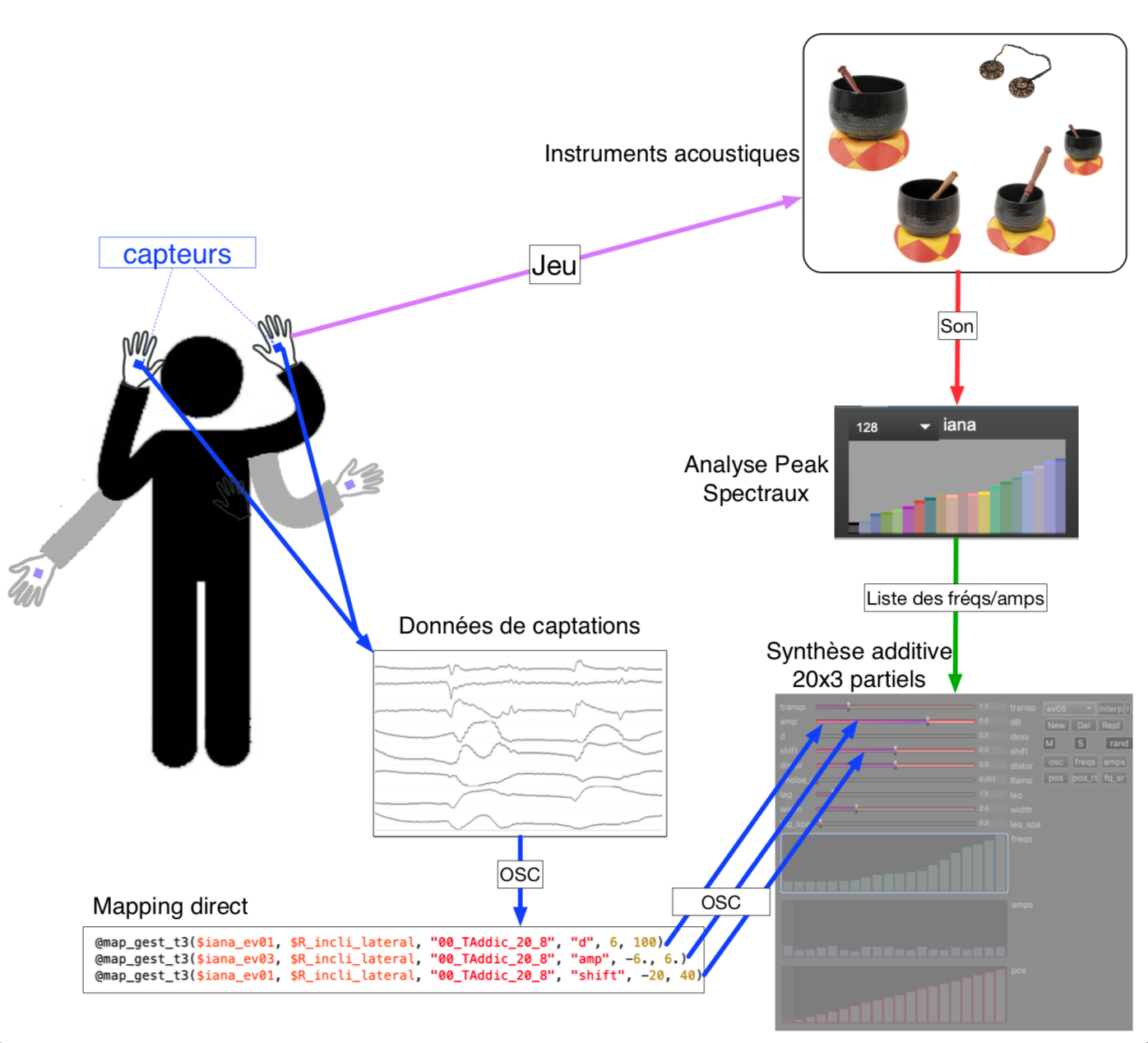
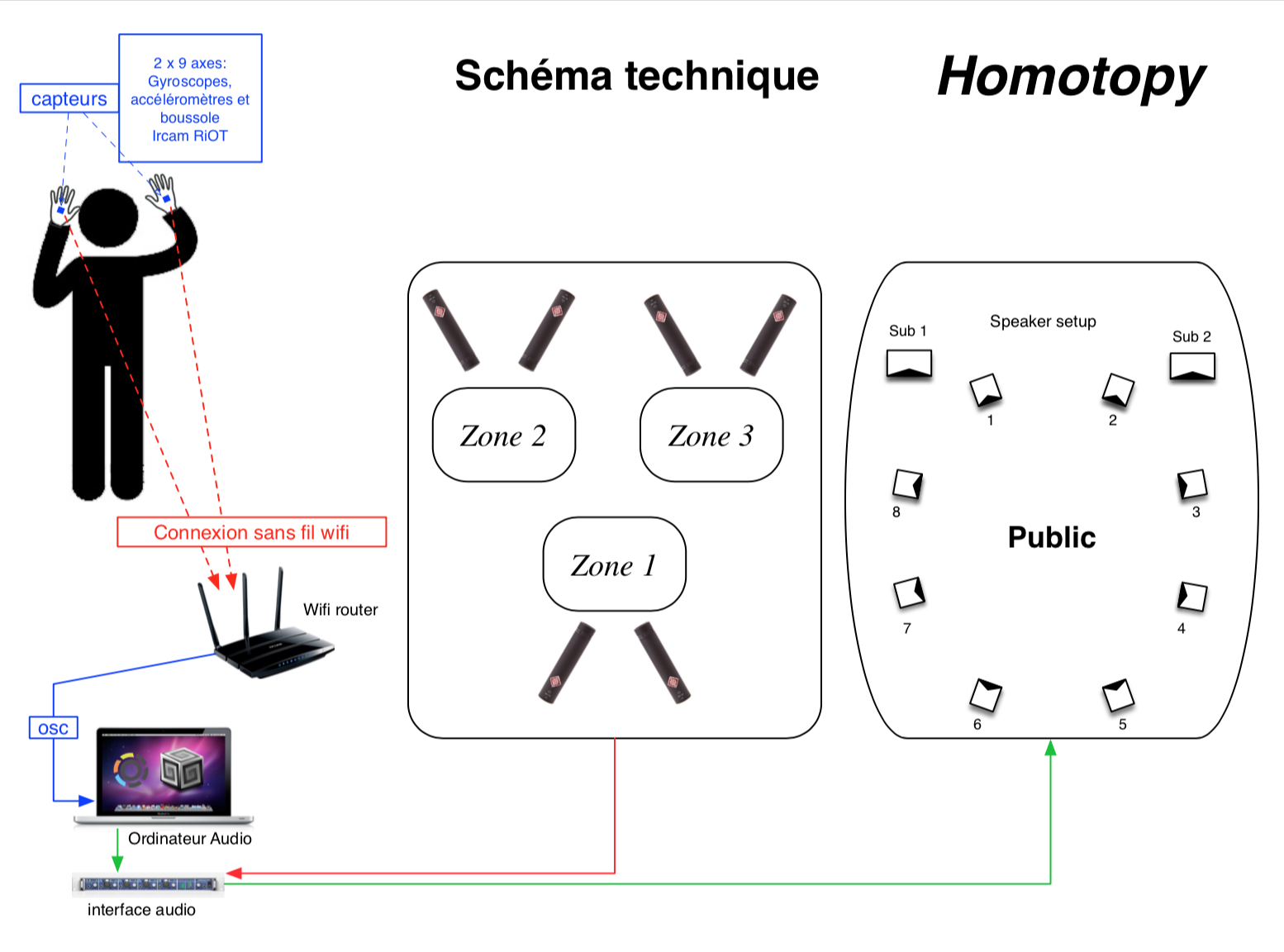
In mathematics, a homotopy (from the Greek homos, same or similar, and topos, place) is a continuous deformation between two paths. This definition refers directly to one of the main ideas of the piece: continuously transforming the real sounds of the percussion instruments through the percussionist’s gestures, captured by 9-axis IMU sensors. To do so, various analysis techniques such as spectral peak analysis were used to generate a resynthesised sound, modified in real time through a range of synthesis techniques: additive, subtractive, granular, wavetable, concatenative, and so on.
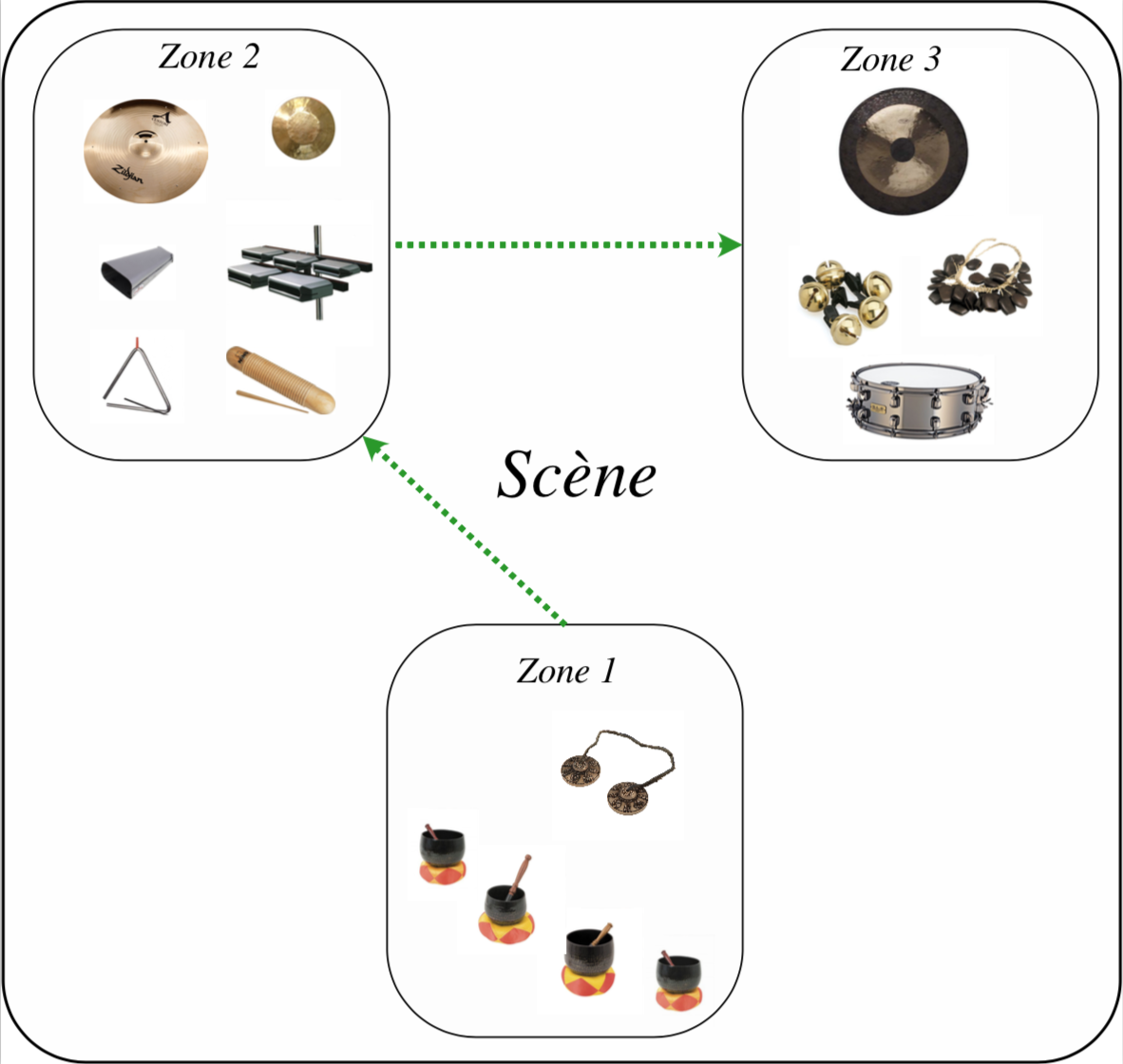
The piece is structured in three parts corresponding to three zones on stage, each with its own timbral, rhythmic and electronic character. The percussionist moves successively from zone 1 to zone 2, then zone 3. The instruments are chosen for their timbre, so as to give each zone its distinct sound.